Types Of Goals
Setting goals is one of the most powerful ways to create direction in life. Goals help you focus, stay motivated, and measure progress. Understanding the different types of goals, and when to use each, helps you make smarter decisions about your time and energy. Each type serves a different purpose: some push you to grow, others help you maintain balance or improve specific areas of your life.
For example, use short term goals to fuel long term progress. Set personal and professional goals to create a balanced life. Mix time-bound and ongoing goals for both achievement and sustainability.
The following five types of goals are most commonly encountered.
1. Big and small

Or, alternatively, simple and complex goals. This is probably the most obvious distinction. The goal "Read 10 books by the end of the year" is much simpler and more predictable than "Open my own coffee shop by the end of the year." The outcome of the former depends solely on you. The latter depends on many factors, involves other people, and requires taking risks and force majeure into account.
2. Term-Based
Depending on their timeframe, goals can be roughly divided into three groups. I've prepared a separate article for each group.
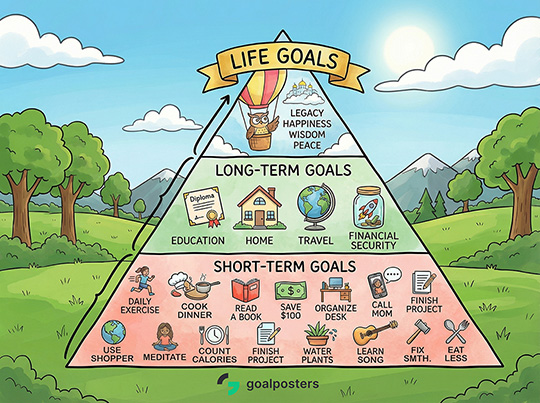
- Short-term goals, like studying for a test
- Long-term goals, like saving for a house
- Life goals, like "Maintain a healthy weight and lifestyle"
Most often, when we talk about goals, we mean only one of these three types, namely long-term ones. However all three types are valuable and can complement each other. The first two push you to act, while the last creates sustainable routines and mindsets. I would suggest imagining their relationship as a pyramid, where short-term, rapidly changing goals are at the base, and life goals that are an important reference point for you are at the top.
3. Personal and collective
Personal goals are quite simple. Our Goalposters service is primarily dedicated to these types of goals. Team goals, on the other hand, are set at work or within a sports team and require separate preparation.
4. Habit-Based
Some goals are based entirely on building consistent habits rather than achieving a single result. These are especially powerful because habits shape your behavior.
Examples:
- Write for 30 minutes every morning
- Floss every night before bed
- Go for a walk after dinner daily
Habit-based goals work well for improving discipline and creating lifestyle changes that stick. Instead of chasing a one-time result, you focus on the process. This is a completely different approach.
One of the most popular books on this topic is Atomic Habits by James Clear.
5. Area-Based
Finally, depending on the area, goals can be divided into a wide variety of categories. Below is a list of the most popular. By following the link, you can view collections of goals from users of our service.
- career
- relationship
- fitness
- health
- educational
- financial
- personal development
Dividing by area can be useful mainly if you are looking for inspiration and examples of goals.